Trong kỷ nguyên điện toán mật độ cao, các hệ thống làm mát bằng không khí truyền thống đang nhanh chóng được thay thế bằng các kiến trúc làm mát bằng chất lỏng tiên tiến. Cốt lõi của sự chuyển đổi này nằm ở bộ phân phối làm mát trung tâm dữ liệu (CDU) — một thành phần hệ thống quan trọng chịu trách nhiệm cung cấp và điều chỉnh chính xác chất làm mát trong toàn bộ cơ sở hạ tầng máy chủ.
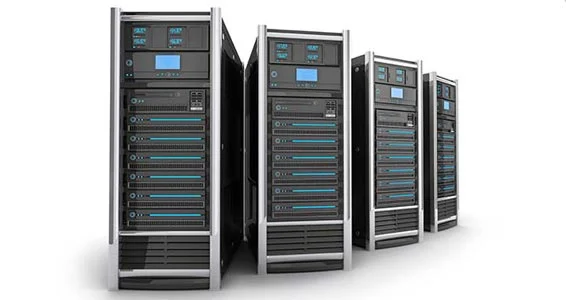
Định nghĩa: Bộ phân phối làm mát trung tâm dữ liệu (CDU) là gì?
Bộ phân phối làm mát (CDU) là thiết bị phân phối trung tâm trong các trung tâm dữ liệu làm mát bằng chất lỏng, cung cấp chất làm mát—nước hoặc chất lỏng chứa flo—đến các tấm làm mát, bể làm mát ngâm hoặc các khối làm mát trực tiếp đến chip. CDU đảm bảo loại bỏ nhiệt có mục tiêu ở cấp độ chip hoặc cấp độ giá đỡ, nâng cao hiệu quả nhiệt và độ tin cậy trong các trung tâm dữ liệu hiện đại.
các chức năng chính của hệ thống CDU
Phân phối chất làm mát: kiểm soát lưu lượng bằng bơm và van để đảm bảo làm mát đồng đều cho từng máy chủ.
Kiểm soát nhiệt độ và áp suất: duy trì nhiệt độ chất làm mát trong phạm vi dung sai hẹp (±0,5°C) và đảm bảo áp suất ổn định để ngăn ngừa hiện tượng xâm thực hoặc rò rỉ.
Thiết kế dự phòng: sử dụng cấu hình bơm kép và nguồn kép để đảm bảo độ khả dụng 99,999%.
Giám sát thời gian thực: tích hợp với hệ thống DCIM để cung cấp phản hồi trực tiếp về lưu lượng, nhiệt độ và tình trạng rò rỉ.
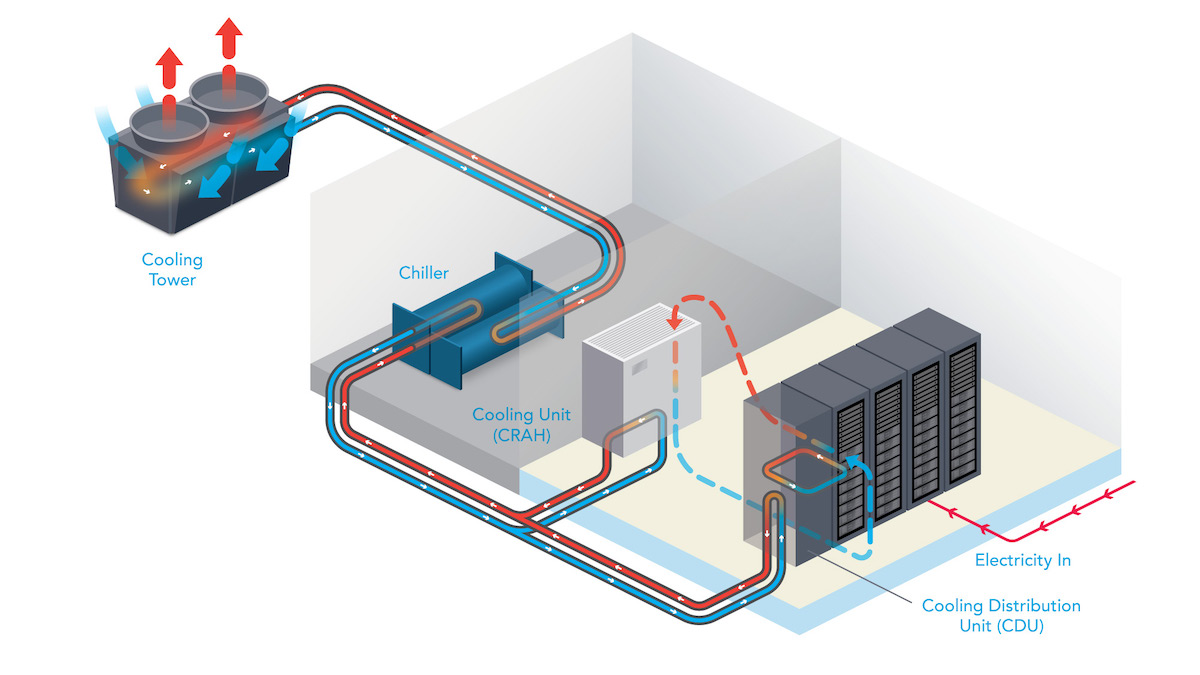
các loại thiết bị phân phối làm mát trung tâm dữ liệu
CDU cấp tủ rack: được thiết kế để sử dụng trong một tủ rack duy nhất, hỗ trợ công suất làm mát 30-100kW. Lý tưởng cho việc triển khai linh hoạt và có khả năng mở rộng.
CDU cấp hàng: cung cấp dịch vụ cho toàn bộ một hàng giá đỡ máy chủ với khả năng hỗ trợ điện năng lên đến 500kW, lý tưởng cho các cụm máy tính mật độ cao.
Bộ làm mát nhúng CDU: được thiết kế đặc biệt cho hệ thống làm mát nhúng một pha hoặc hai pha, tương thích với các chất lỏng chứa flo như 3M Novec.
ưu điểm của hệ thống làm mát bằng chất lỏng CDU
Đạt được hiệu suất sử dụng điện năng (PUE) thấp tới 1,05, tiết kiệm hơn 30% năng lượng so với làm mát bằng không khí.
Hỗ trợ khối lượng công việc mật độ cực cao (ví dụ: hơn 50kW mỗi rack cho máy chủ AI hoặc GPU).
hoạt động êm ái với thiết kế CDU không quạt (<50db noise level).
application scenarios
supercomputing facilities (e.g., japan's fugaku)
ai training clusters (e.g., nvidia dgx a100)
edge data centers with compact cdu footprints
cold plates, heat sinks, and water blocks: the execution layer of cdu cooling
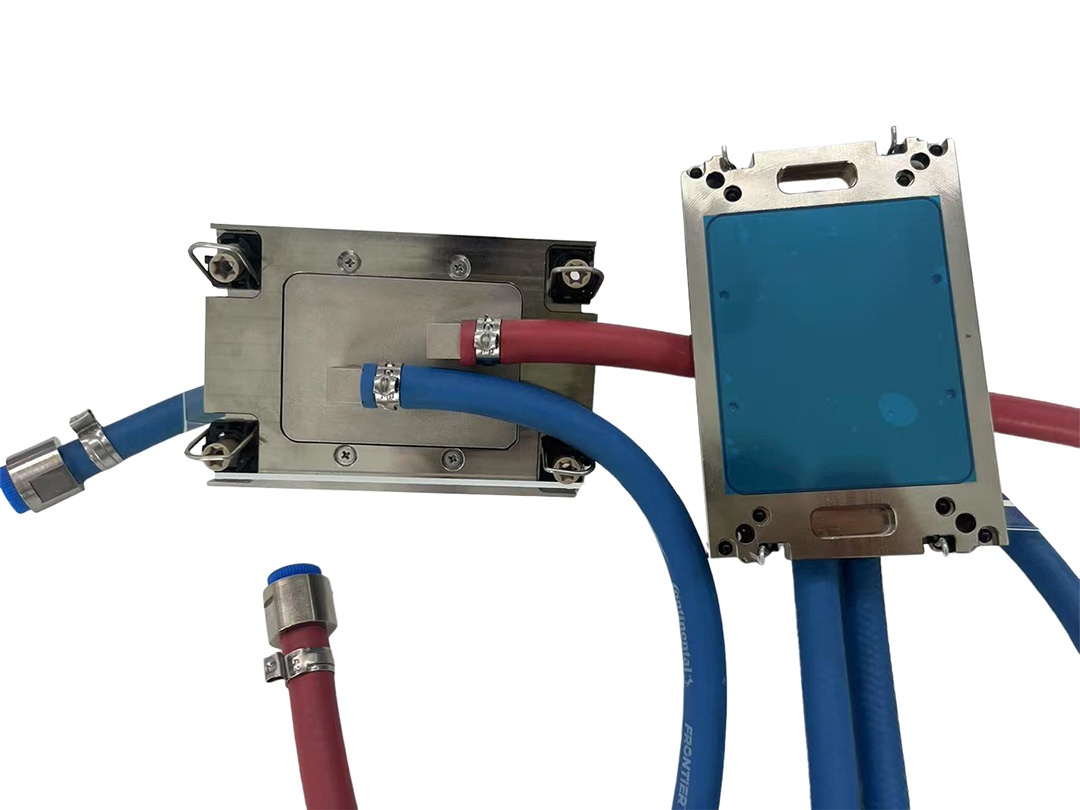
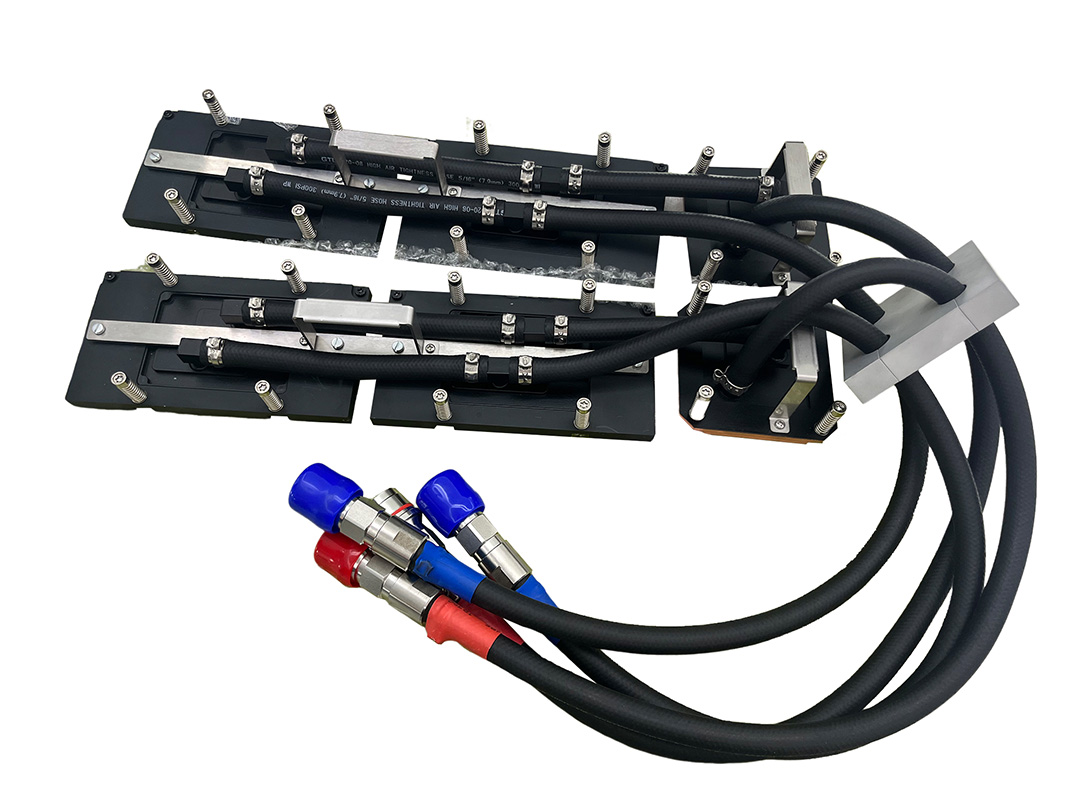
while the cdu serves as the command center for liquid flow, its true cooling potential is realized through its terminal components: cdu water-cooled cold plates, heat sinks, and water blocks. these components directly interface with heat-generating devices to execute efficient thermal transfer.
| component | cdu system role | application |
|---|
| cold plate | transfers coolant to chips via microchannels for precise heat removal | gpu/cpu-intensive racks, ai compute nodes |
| heat sink | provides secondary cooling to cdu's internal electronics | cdu control cabinet (pumps, psu modules) |
| water block | customized cooling of irregular thermal sources; connects with cdu pipes | hpc systems, supercomputing accelerators |
technical advantages vs. traditional air cooling
1. cold plates (cdu water plates)
extreme heat flux capacity: supports up to 500–1000w/cm², outperforming air cooling (50–100w/cm²).
surface uniformity: delivers thermal spread with <2°c delta across the plate, preventing local overheating.
smart cdu integration: built-in sensors feed real-time data to cdu controllers, enabling dynamic flow and temperature regulation.
2. heat sinks for cdu internal components
cdu self-cooling: ensures cdu reliability by passively cooling key electronics.
lightweight design: aluminum 6063 construction minimizes weight, ideal for rack-mount cdu units.
3. custom water blocks (cdu water block solutions)
complex shape compatibility: cnc or 3d-printed to match non-standard chip designs (e.g., nvidia h100).
low flow resistance: engineered water channels reduce cdu pump workload (pressure drop < 0.3 bar).
cdu-component synergy: smart thermal management
modern cdu liquid cooling systems are not standalone—they function in harmony with cold plates, heat sinks, and water blocks to form a dynamic, closed-loop thermal architecture. key highlights include:
dynamic flow tuning: cdu adjusts coolant delivery based on feedback from water plates or water blocks (e.g., via intel dcm protocol).
leak protection: quick-disconnect fittings (e.g., cpc, qd) on water blocks and cdu hoses ensure sealed, safe connections.
energy efficiency: combined cdu + cold plate architecture can achieve pue as low as 1.05, compared to 1.5+ for traditional systems.
real-world applications
google data center: utilizes cdus to distribute chilled water to rack-mounted water plates for tpu cooling.
tesla dojo supercomputer: employs cdu-integrated custom water blocks to manage 1mw per cabinet.
crypto mining farms: use aluminum cold plates + cdu instead of fans, reducing power consumption by 30%.
future trends in cdu-based cooling solutions
two-phase cdu cooling: uses phase-change fluids like liquid nitrogen to achieve 5x efficiency gains.
ai-driven cdu control: enables predictive adjustments in flow and temperature based on workload forecasting.
as the backbone of next-generation data center infrastructure, the data center cooling distribution unit (cdu)—along with advanced cdu water plates, heat sinks, and liquid cooling water blocks—will continue to evolve toward smarter, quieter, and more efficient thermal management solutions.
keyword summary: data center cooling distribution unit (cdu), cdu water plate, cdu water block, immersion cdu, rack-level cdu, cold plate, heat sink, liquid cooling system, full-chain liquid cooling, water-cooled server, ai liquid cooling.